
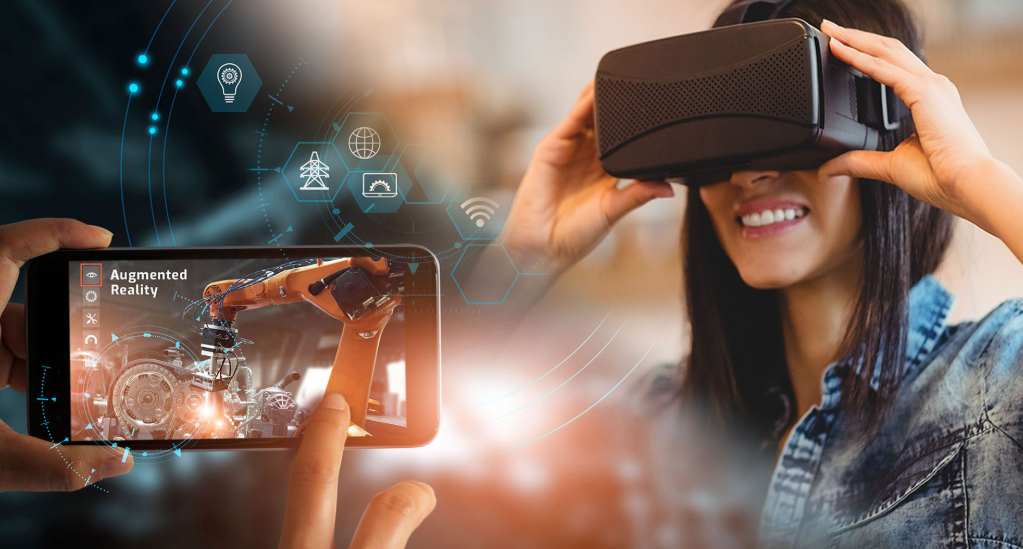
The Future of Virtual Reality and Augmented Reality
The future of Virtual Reality (VR) and Augmented Reality (AR) is poised to reshape multiple sectors significantly. As these technologies advance, their applications in healthcare, retail, and education are becoming increasingly sophisticated. This transformation raises essential questions about user engagement and the implications of immersive experiences. Moreover, ethical considerations surrounding privacy and mental health are becoming more pressing. What measures will be necessary to balance innovation with responsibility in this evolving landscape?
The Evolution of VR and AR Technologies
As the demand for immersive experiences has surged, the evolution of virtual reality (VR) and augmented reality (AR) technologies has transformed significantly over the past few decades.
Historical milestones, such as the development of the first VR headsets and AR applications, alongside technological advancements in graphics and processing power, have paved the way for richer, more engaging experiences.
This evolution has granted users unprecedented freedom to explore virtual realms.
See also: The Future of Semiconductor Technology
Transforming Industries: Applications of VR and AR
The advancements in virtual reality (VR) and augmented reality (AR) technologies have not only enhanced user experiences but have also begun to reshape various industries.
In healthcare applications, VR facilitates immersive training and patient therapies, while AR enhances diagnostics and surgical precision.
Similarly, in retail experiences, these technologies offer interactive shopping and personalized marketing, ultimately transforming consumer engagement and operational efficiencies across sectors.
Enhancing User Experience: The Role of Hardware and Software
While the immersive potential of virtual and augmented reality technologies is widely recognized, the experience they offer is profoundly influenced by the underlying hardware and software.
Effective user interface design enhances navigation, while advanced sensory feedback enriches engagement, allowing users to feel more connected to virtual environments.
Together, these elements create a seamless interaction that elevates user experience, unlocking the true capabilities of immersive technology.
Ethical Considerations and the Future of Immersive Technologies
Emerging alongside advancements in hardware and software, ethical considerations are gaining prominence in discussions surrounding the future of immersive technologies.
Privacy concerns are increasingly critical as users navigate virtual landscapes, while the potential for digital addiction raises alarms about mental health.
Balancing innovation with ethics will be essential to ensure these technologies empower individuals rather than encroach upon their autonomy and well-being.
Conclusion
In conclusion, while concerns about addiction and over-dependence on VR and AR technologies are valid, the potential benefits—ranging from improved mental health treatment to enhanced educational experiences—cannot be overlooked. By prioritizing ethical practices and user well-being, the future of these immersive technologies can indeed empower individuals and foster innovation across various sectors. As we embrace this evolution, the promise of VR and AR lies not just in entertainment, but in their capacity to enrich human connections and experiences.


